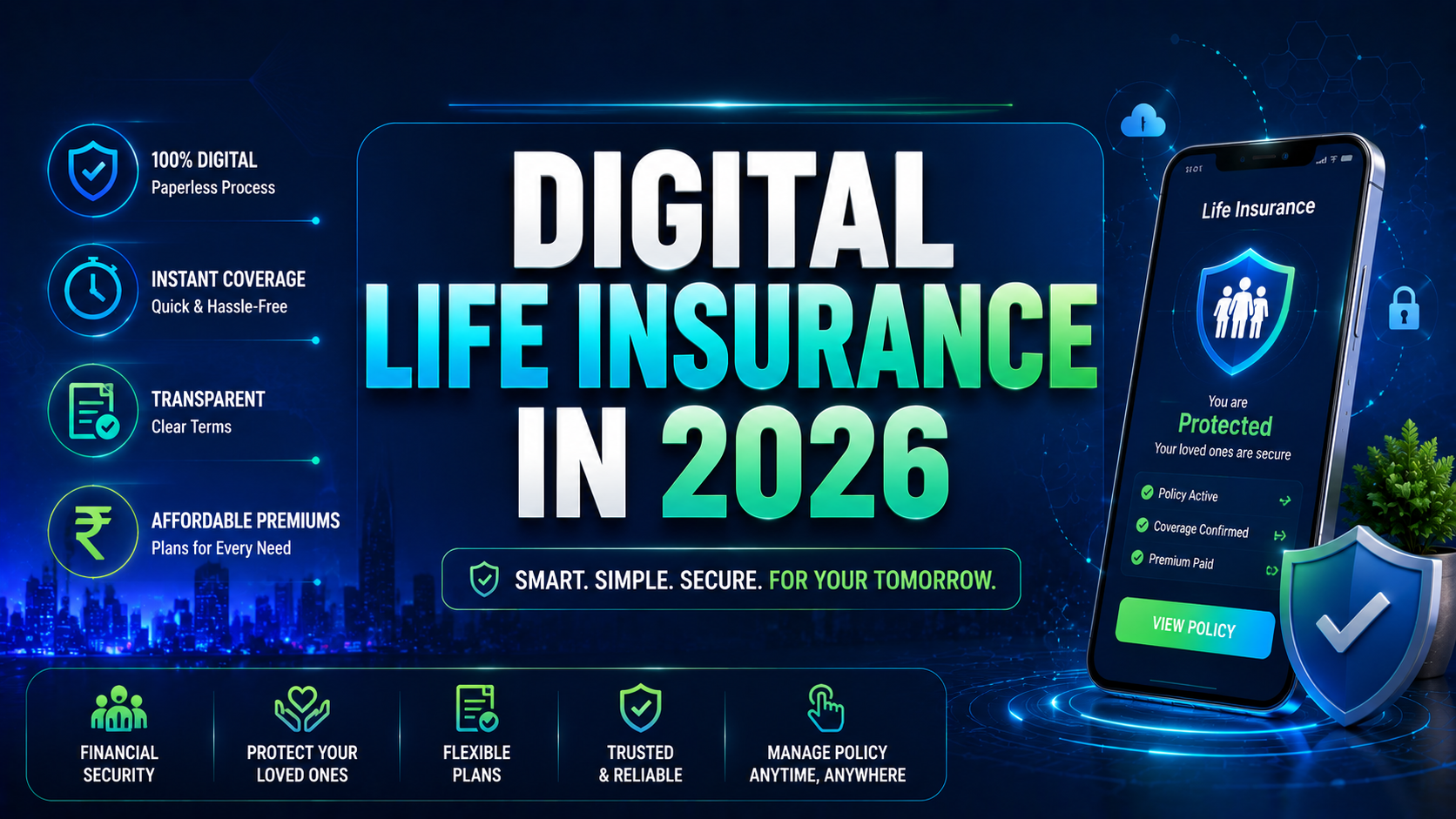
Digital Life Insurance in 2026: How AI Is Transforming Policy Approval and Claims
Introduction: Why Traditional Life Insurance Is Rapidly Changing
For decades, purchasing life insurance involved lengthy paperwork, medical examinations, manual underwriting, and weeks of waiting for approval. Claim settlements could take months, leaving families frustrated during already difficult times.
In 2026, that experience is changing dramatically.
Artificial Intelligence (AI), machine learning, predictive analytics, and digital automation are transforming the life insurance industry from a paperwork-driven process into a fast, data-driven customer experience.
Today, many consumers can apply for an online life insurance policy, receive an instant life insurance approval, and manage their coverage entirely through mobile apps and digital platforms.
The shift toward digital life insurance 2026 is not simply about convenience—it is redefining how insurers assess risk, detect fraud, settle claims, and serve customers.
In this article, we explore how AI in life insurance is reshaping policy approvals and claims processing, the benefits and risks involved, and what consumers should know before choosing a digital insurance provider.
What Is Digital Life Insurance?
Digital life insurance refers to life insurance products that leverage technology throughout the customer journey.
This includes:
- Online applications
- AI-driven underwriting
- Automated risk assessment
- Digital policy issuance
- Mobile policy management
- AI-powered claims processing
- Electronic document verification
Instead of relying heavily on human intervention, insurers increasingly use advanced algorithms to evaluate applicants and process claims.
The result is faster decisions, lower operational costs, and improved customer experiences.
Why AI Is Becoming Essential in Life Insurance
The insurance industry generates enormous amounts of data.
This includes:
- Medical history
- Financial records
- Lifestyle information
- Demographic data
- Claims history
- Behavioral patterns
AI can analyze these data points far faster than traditional systems.
Key Drivers Behind AI Adoption
Growing Customer Expectations
Modern consumers expect:
- Faster approvals
- Digital experiences
- Mobile-first services
- Transparent claims processes
Rising Operational Costs
Insurance companies seek greater efficiency through automation.
Improved Risk Accuracy
AI helps insurers make more precise underwriting decisions.
Fraud Prevention
Machine learning can identify suspicious activities more effectively than manual review processes.
How AI Is Transforming Life Insurance Underwriting
What Is Underwriting?
Underwriting is the process insurers use to determine:
- Eligibility
- Risk level
- Premium pricing
- Coverage limits
Traditionally, underwriting could take several weeks.
Today, AI-powered underwriting can deliver decisions within minutes.
AI-Powered Risk Assessment
Modern AI systems analyze multiple data sources simultaneously.
Factors Evaluated
- Age
- Occupation
- Income
- Medical records
- Lifestyle habits
- Existing health conditions
- Prescription history
- Family medical background
Rather than relying solely on broad risk categories, AI creates personalized risk profiles.
Benefits
- Faster approvals
- More accurate pricing
- Reduced manual errors
- Better customer experience
Instant Life Insurance Approval: How It Works
One of the biggest innovations in digital life insurance 2026 is instant approval.
Traditional Process
- Application submission
- Document review
- Medical examination
- Manual underwriting
- Final approval
Time required:
Several days to weeks.
AI-Enabled Process
- Online application
- Digital identity verification
- Automated data analysis
- AI risk scoring
- Instant decision
Time required:
Minutes or hours.
Real-World Example
A healthy 30-year-old professional applying for term insurance may receive:
- Instant underwriting
- Immediate premium calculation
- Same-day policy issuance
without requiring extensive paperwork or physical meetings.
Digital Onboarding Is Eliminating Insurance Friction
Consumers increasingly prefer self-service experiences.
AI-powered onboarding allows customers to:
- Upload documents digitally
- Complete e-KYC verification
- Sign electronically
- Receive policy documents instantly
Advantages
Convenience
Applications can be completed anytime.
Faster Processing
Automation eliminates many manual bottlenecks.
Improved Accuracy
Digital systems reduce data entry mistakes.
Better User Experience
Customers enjoy seamless interactions.
AI Insurance Claims Processing: The Next Revolution
Claims settlement is often the most critical moment in the insurance journey.
Historically, claims processing involved:
- Extensive documentation
- Multiple verification stages
- Long waiting periods
AI is changing this dramatically.
How AI Insurance Claims Processing Works
AI systems can:
- Verify documents automatically
- Cross-check policy data
- Detect inconsistencies
- Assess claim validity
- Flag fraud risks
- Recommend approval decisions
Human reviewers then focus primarily on complex cases.
Benefits of Automated Claims Processing
Faster Settlement
Claims can be processed significantly faster than traditional methods.
Enhanced Accuracy
Automated validation reduces errors.
Improved Customer Satisfaction
Families receive benefits sooner when they need them most.
Fraud Detection
AI identifies unusual claim patterns that might otherwise go unnoticed.
Traditional vs AI-Enabled Life Insurance
| Feature | Traditional Insurance | AI-Enabled Insurance |
|---|---|---|
| Application Process | Paper-Based | Fully Digital |
| Underwriting | Manual | Automated |
| Approval Time | Days or Weeks | Minutes or Hours |
| Claims Processing | Manual Review | AI-Assisted |
| Customer Support | Office Visits | Digital Channels |
| Fraud Detection | Reactive | Predictive |
| Customer Experience | Moderate | Enhanced |
The digital model offers significant advantages in speed and convenience.
What Consumers Should Know Before Buying Digital Insurance
While technology improves efficiency, policyholders should still perform due diligence.
Review Coverage Carefully
Never focus solely on approval speed.
Evaluate:
- Coverage amount
- Policy term
- Exclusions
- Riders
- Premium affordability
Understand Data Usage
AI systems rely heavily on personal data.
Ask:
- What data is collected?
- How is it stored?
- Who can access it?
Verify Claim Procedures
Even automated systems require documentation.
Understand:
- Claim timelines
- Required documents
- Escalation processes
Compare Multiple Providers
Digital convenience should not replace proper insurance planning.
Always compare:
- Features
- Claim settlement records
- Financial strength
- Customer reviews
Potential Challenges and Privacy Concerns
AI offers many advantages, but consumers should be aware of potential risks.
Data Privacy Issues
Insurance companies process highly sensitive personal information.
This includes:
- Health records
- Financial data
- Identity documents
Strong cybersecurity measures are essential.
Algorithm Bias
Poorly designed AI models could potentially create unfair outcomes.
Regulators and insurers are increasingly focusing on ethical AI practices.
Limited Human Interaction
Some consumers still prefer personalized advice.
Fully automated systems may not always address complex financial situations effectively.
Regulatory Compliance
Governments continue developing frameworks for responsible AI use within insurance.
Compliance will become increasingly important beyond 2026.
Actionable Strategies for Consumers
If you are considering an online life insurance policy, follow these best practices.
Choose Reputable Insurers
Prioritize companies with:
- Strong financial ratings
- High claim settlement records
- Established digital infrastructure
Maintain Accurate Information
Provide complete and honest disclosures.
Incorrect information may affect future claims.
Review Coverage Annually
Life circumstances change.
Update coverage after:
- Marriage
- Childbirth
- Home purchases
- Business expansion
Use Digital Tools Wisely
Take advantage of:
- Premium calculators
- Coverage estimators
- AI recommendation tools
while still seeking professional advice when needed.
Expert Insights: The Future of Life Insurance Beyond 2026
The next generation of insurance technology is already emerging.
Hyper-Personalized Policies
AI will create increasingly customized coverage plans based on individual lifestyles and financial goals.
Continuous Risk Monitoring
Future systems may adjust risk assessments dynamically using health and behavioral data.
Predictive Claims Management
AI may proactively identify potential claim situations before they occur.
Voice and Conversational AI
Policyholders could manage insurance entirely through AI assistants and conversational platforms.
Blockchain Integration
Smart contracts could further accelerate claims settlement and policy administration.
Key Takeaways
- AI in life insurance is transforming underwriting, claims processing, and customer experiences.
- Digital life insurance 2026 offers faster approvals, smarter risk assessment, and improved convenience.
- Instant life insurance approval is becoming increasingly common for eligible applicants.
- AI insurance claims processing helps reduce delays and improve accuracy.
- Consumers should still evaluate policy quality, privacy protections, and insurer credibility.
- The future of insurance will likely combine AI, automation, predictive analytics, and personalized coverage models.
FAQ
1. What is AI in life insurance?
AI in life insurance refers to the use of artificial intelligence technologies to automate underwriting, risk assessment, customer service, fraud detection, and claims processing.
2. Can I get instant life insurance approval online?
Yes. Many insurers now offer instant or near-instant approvals through AI-powered underwriting systems, depending on eligibility and risk profile.
3. Is digital life insurance safe?
Digital life insurance can be safe when purchased from reputable insurers that follow strong cybersecurity and data protection practices.
4. How does AI insurance claims processing work?
AI systems analyze policy information, verify submitted documents, detect inconsistencies, and assist insurers in making faster claim decisions.
5. Will AI replace human insurance advisors?
AI is expected to automate many routine tasks, but human advisors will remain important for complex financial planning, personalized recommendations, and customer support.
Conclusion
The life insurance industry is entering a new era powered by artificial intelligence and digital transformation. What once required weeks of paperwork and manual review can now be completed in hours—or even minutes. From AI-powered underwriting and instant life insurance approval to automated claims processing, technology is making insurance faster, smarter, and more accessible.
However, speed should never replace careful decision-making. Consumers must still evaluate coverage adequacy, insurer reliability, data privacy practices, and long-term financial needs. As digital life insurance continues evolving beyond 2026, those who understand both the opportunities and challenges of AI-driven insurance will be better positioned to protect their families and financial futures.
The future of life insurance is not just digital—it is intelligent, personalized, and increasingly proactive in helping individuals achieve lasting financial security.